
Don’t Judge a Book by its Cover
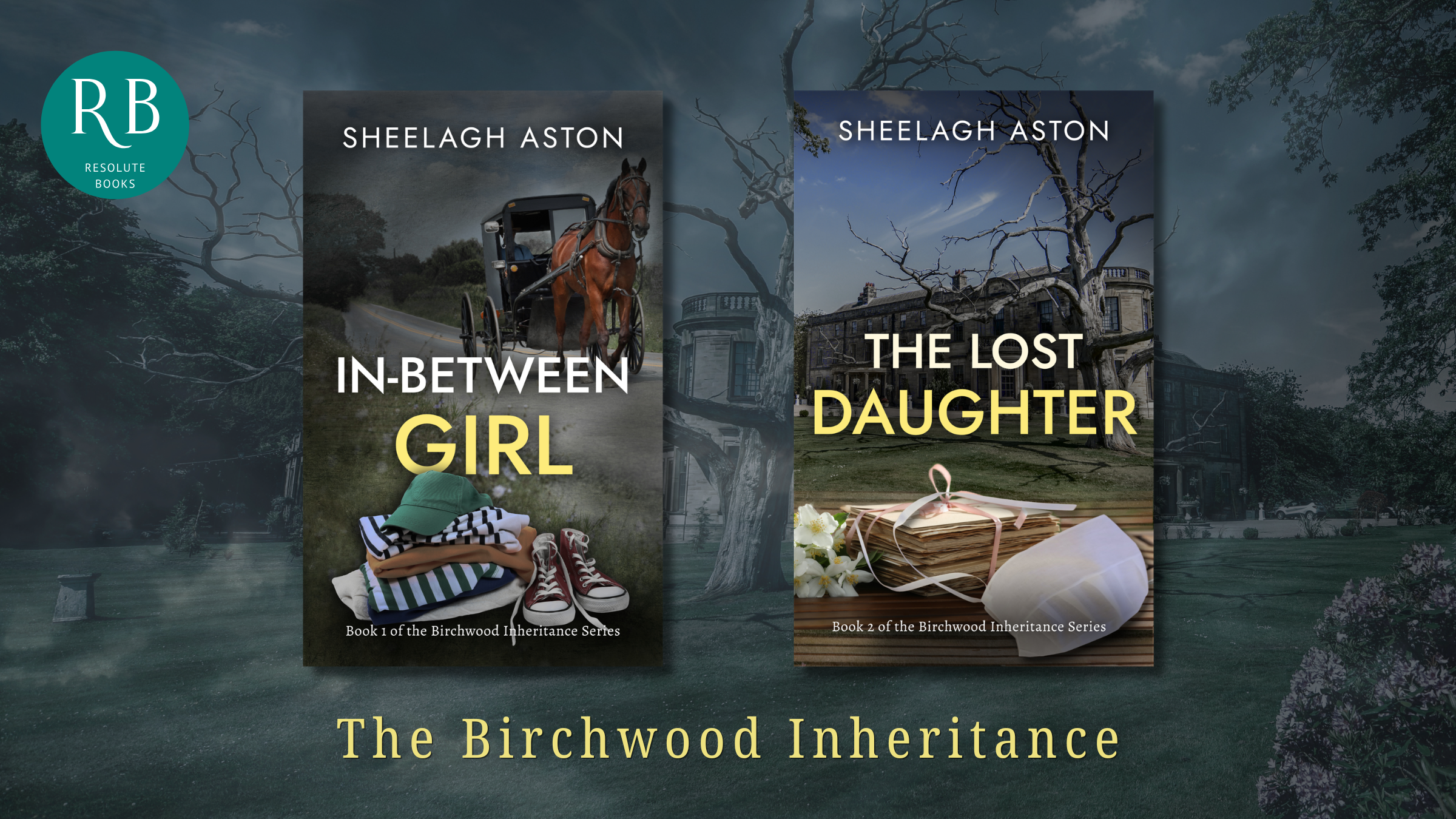
If a picture can say a thousand words – what does a book cover say?
Sheelagh Aston reflects on creating a cover for her new book, The Lost Daughter.
Like some of my follow authors at Resolute Books, I have moved beyond book one to publishing my second book, The Lost Daughter (1st July). It is the sequel in the family suspense series, The Birchwood Inheritance.
When it came to creating the cover for book 1, In-Between Girl, I found it incredibly difficult to visualise a suitable image. It was not because I am not a visual thinker, but more to do with getting that tricky balance to create a cover that was eye-catching, unique, and would not look out of place on a bookshop shelf.
As a more experienced author advised me after its publication, the job of a book’s cover is to give the prospective reader clues about the story, making them intrigued enough to pick the book up and buy it. The second objective is to nail the genre it belongs to, so the reader knows what kind of book they are getting. In their experience when discussing potential covers with their publisher’s marketing person and cover designer, it is often the marketing person who has the final say.
Armed with this advice, designing book 2’s cover, the cover designer and I focused on the important clues that helped the heroine, Hannah, to achieve her goal. Three symbols: a house, a stack of letters, and a prayer cap. Thanks to Liz Carter, a photo of Beamish Hall, County Durham, on a sunny spring day was transformed into the foreboding fictional Cavendish Hall. The picture I took of the prayer cap lying on my kitchen table, which I had bought for talks, and the stack of letters from Shutterstock, were layered and blended into the foreground. The clear, striking lettering added and completed the mysterious feel to the cover.
As a standalone book, the cover nailed it, but as part of a series, it was so different to the first book that I decided to change the cover of In-Between Girl. This time we focused on what the major challenge was for Hannah: walking the razor-sharp edge between her conservative Amish world and the wider world. Two instantly recognisable but opposing images of both worlds were used – a horse-drawn Amish buggy and a pile of casual clothes. The bluebells and trees of the country lane and bright clothes were altered to a wintry scene to create a similar mysterious vibe to The Lost Daughter’s cover. They each tell their own stories with the clues on the cover yet hint at the ongoing adventures of Hannah in the series.